
The Corinthian congregation was riddled with problems. Paul had to address numerous things that would be repugnant, even to our morally depraved society. A sectarian spirit permeated this group (chs. 1-4). Sexual immorality “of such a kind as does not exist even among the Gentiles” (1 Cor. 5:1b). Folks were eating with no regard for how it might be hurting their brethren with dietary sensitivities (ch. 8). The worship services were wild and chaotic comparable to what one might have found in pagan temples (chs. 11-14). The Corinthian brethren were a wild bunch!
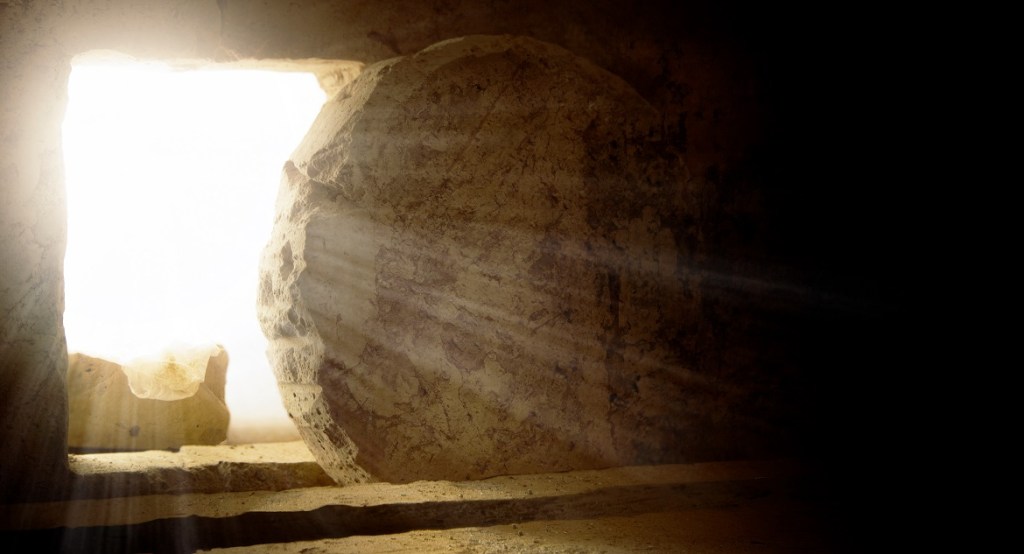
It should be impressive then, that the longest chapter in the first Corinthian epistle addresses the topic of the resurrection. Every issue Paul spoke about was clearly relevant and spiritually lethal. But there was no greater doctrine in the Christian faith than the resurrection of Jesus of Nazareth. This doctrine is what makes all the rest of the epistle matter. It all goes back to the empty tomb.
The resurrection is THE crux of the Christian faith. If Jesus came back from the dead, all of this matters; if Jesus did not come back from the dead, then none of this matters. This was the foundation of the gospel message that saves (1 Cor. 15:1-2). The resurrection is rooted in Scripture (1 Cor. 15:3-4) and in historical eyewitness evidence (1 Cor. 15:6-9). Without the resurrection of Jesus Christ from the dead we have nothing. Thus, “Our preaching is in vain” and our “faith also is in vain” (1 Cor. 15:14).
Faith is worthless without the resurrected Lord (1 Cor. 15:17). Theologically speaking, without a resurrected Savior humanity remains lost in sin (1 Cor. 15:17). Paul sharply stated the simple fact, “If we have hoped in Christ only in this life, we are of all people most to be pitied” (1 Cor. 15:19). If there’s no resurrection, Christians are a pitiable lot!
Thankfully Paul’s dialogue continued: “But the fact is, Christ has been raised from the dead, the first fruits of those who are asleep” (1 Cor. 15:20). I think sometimes we forget this truth, that without the resurrection we would have no Christianity. Had Matthew stopped at the end of chapter twenty-seven, we would never have heard of the Man from Nazareth. Had Jesus not come back from the dead, He would have fallen into a long and sad history of people who died under the Roman Empire. Had Mark stopped after chapter fifteen, there would be no Sundays full of worship. Had Luke stopped after chapter twenty-three, there would never have been an Acts of the Apostles, no NT church, and no salvation preached. Had John stopped after chapter nineteen, there would have been no lives given to King Jesus. No Sundays would be the “Lord’s Day.” No Sundays would have the Lord’s Supper. No worship would be offered, no lives changed, and no NT Scriptures.
Truly, Christ has been raised from the dead. The ultimate response to all of these various spiritual infirmities is a better understanding and appreciation for the resurrection of Jesus Christ. Because Jesus didn’t stay dead, we can have confidence and we can have the courage to change. Thus, Paul concluded one of the greatest chapters of the entire Bible with: “Therefore, my beloved brothers, be firm, immovable, always excelling in the work of the Lord, knowing that your labor is not in vain in the Lord” (1 Cor. 15:58). And brethren, it is because of the resurrection of Jesus Christ from the dead.
 The Preacher's Desk
Leave a comment