
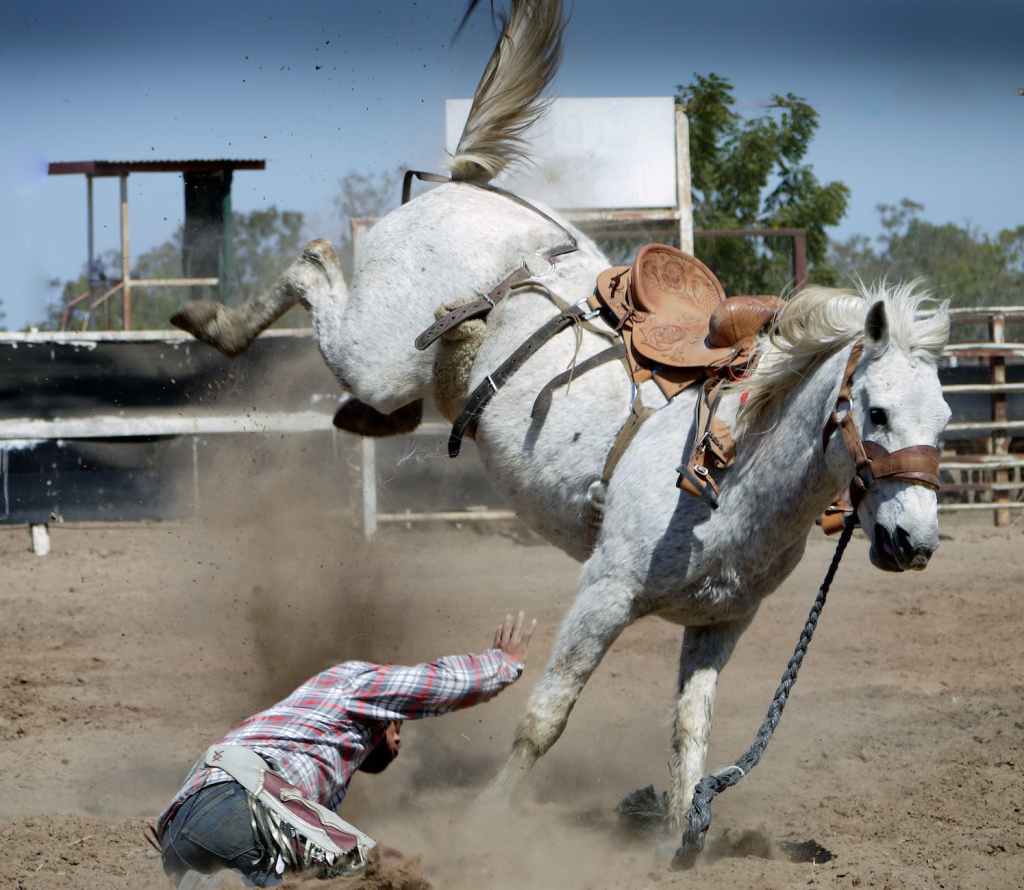
The expression may not mean anything to you. It’s quite possible you have never heard it before, and have no idea what it refers to. Or perhaps you’ve heard it but do not know what it means. It is typically used for someone who is a constant source of annoyance. But the original meaning carries a much more dangerous concept. The saying comes from the ranching world. ‘Bur’ is short for cocklebur—a plant common in most of the southern-southwestern states. The “fruit” it sheds has little barbs, think evil Velcro. If you walk through an area where they can be found, you will likely find several stuck to you. When they stick you, you know it—they are painful. As bad as they hurt you, imagine how your horse feels when they work their way between your saddle blanket and his back. When you are cowboying in a wild country, you have to always be mindful of your horse. If you get some of these on your pad/blanket, you better take the time to get them all picked off. I’ve seen good horses who wouldn’t buck, go a little haywire because of these little devils. It’s a great way to get seriously injured.
Notice a couple of things: (1) These things are insignificant until they make their location painfully obvious. (2) If you go walking in their native habitat, you will likely find them stuck to you. (3) They find a way to work into areas they are not welcome. (4) They hurt, even when you are picking them off. (5) They can be extremely dangerous if they latch on to you at the inopportune time. (6) When they bite, they can turn a typically genial creature into a 1,000 lbs death-mobile.
Some applications to consider: (1) Some people are cockleburs—they rub you the wrong way; sources of irritation, and frustration. Be careful. (2) Pay attention to who you are around and the effect they have on you—if this person is a cocklebur be especially cautious. (3) It may be this person works their way into places they should not be, just to incite you—keep your distance and be aware. (4) This person can be a source of pain; emotionally, spiritually, perhaps even physically—protect yourself. (5) don’t ignore the danger, dismissing it as just “so and so”—don’t risk condemnation because of a cocklebur. (6) Don’t allow them to work their way under your saddle, and cause you to be someone you are not, or do something you should not, and normally would not. Keep control of yourself, by always being mindful of your saddle, pad, blanket, and gear.
Truth connection: “And if anyone does not obey our word in this epistle, note that person and do not keep company with him, that he may be ashamed” (II Thess. 3:14).
 The Preacher's Desk
Leave a comment